Creating Original Stories

be-original-quotes-4Some people say,”There are no original stories”.  I disagree there are original stories, it’s just that they are few and far between.

Nearly all of us are bound by the stories of the societies we grow up in, the experiences we share, and the education that shapes us. For most of us, by the time we leave education we are not capable of an original thought, let alone creating an original story.

I would say the following are original stories, but I could be wrong:

  • Frankenstein by Mary Shelly
  • Pride and Prejudice by Jane Austen
  • Dune by Frank Herbert
  • Animal Farm by George Orwell
  • Lord of the Rings by Tolkien
  • The story of Jesus.
  • The Time Travelers Wife by Audrey Niffenegger

To create an original story, I reckon you need to be:

  1. A visionary who can see the consequences of where society is headed.
  2. A young child who has not yet learned the moors and restraints of society.
  3. Mentally different, so the moors and restraints of society have little impact on you or you see the world from a different perspective.

Or you know someone like one of the above.

For the rest of us: “Good writers borrow, great writers steal” – there seems to be a great deal of argument about who said that.

Some of the most influential stories of recent history have been reworkings of other stories e.g. Star Wars is Lord of the Rings set in space, Alien is just another space monster movie but taken to an extreme, Bridget Jones is Pride and Prejudice, and Romeo and Juliet have been retold numerous times.

The way you make something your own is by taking the bones of a story: the plot, characters, story beats, and theme, and doing something different with them: Change the theme, change the location, change the characters, change the setting, change the ending, change the hurdles/difficulties the characters have to overcome, give them super powers, give them a disability, change the consequences, put the story in the past, in the future, include time travel, restrict/unrestrict the characters in some way, give the characters different character traits/flaws.

If you follow through the consequences of any of these changes, scene by scene, you will end up with a story that is uniquely your own.

Nick

The secret of good writing

secret

You want the secret to becoming a good writer?  Here it is: story, style and readability.

If people appreciate your story and like your writing style in the very first thing you ever write, then you are already a good writer.

Chances are though, that one, or more, or maybe all, of the three elements (story, style, readability) will need work before you and/or your readers feel comfortable with your writing.

Learn the rules of the writing craft, then experiment until you know how to break them in a style that is uniquely yours and that your readers enjoy.

What is deemed a mistake for me may work brilliantly for you.

Just one more word of advice: there is no such thing as a good first draft. Good writing is actually good re-writing/editing — absolutely anything can be re-written.

Nick

Living by writing

tumblr_mb2dgmhcxx1r9isqgHow popular does a novelist need to be in order to make a living solely from writing?

Any author, who doesn’t simply get lucky, has to release a ton of titles and garner loads of fans in order to make a living.  It’s also important to keep fans, and inspire them to chat about the books; word of mouth sells more books than advertising.  This is possible on the internet, but it takes years to build that sort of following and have enough published books ‘in the bag’ to keep new readers buying.

No one talks about this, but a lot of authors published through the big 5 and their subsidiaries don’t make a living at writing.  Also the marketing budget expires after six months so after that your book is essentially self-published anyway.  In fact, very few authors make a sustainable living through their novels.

Let’s look at some fictitious figures for a self published author:

$0.99 is a good price for a first book. If it is well written and interesting, $1.99 is a good price for a second book, $1.99 is also a good price for the third book and $3.49 is a good price for the box set; $7.99 is a good price for a 9 book box set.  Plus, you will need some freebies to give away to new customers who wish to sample your work or encourage than to join your email list, and give to existing customers to keep them ‘on board’ until your next publication.

 To make $1,200 per month you will need to sell 225ish big box sets per month, or 500ish small box sets.  This means you need to be producing at least 5 full novels per year (which is going some) and have somewhere in the region of 10,000 regular customers on your email list.  It is certainly do-able, but it ain’t going to happen over night. So don’t give up the day job any time soon – though if you can afford to go part-time that would certainly help.

My advice is to write because you enjoy it, and if you enjoy it enough, put in enough work, and are disciplined enough, you might end up publishing sufficient books to eventually make a living.  Even then, you may still require a part time job to make ends meet.

Nick

Do you have some ideas to write a very good book?

best-seller-ribbon-9182723_sI was recently asked this question by a follower:

Do you have some ideas to write a very good book? I want to write more than anything, but sometimes the ideas simply doesn’t flow or come to me.

This is my answer:

If you are wanting to write fiction, then forget the old adage about writing what you know. No one wants to know what you know; readers want to know what you have experienced, how you reacted, and why.

Character and conflict are at the heart of every good story. So.here is what you do :

  1. Dream up an interesting character.
  2. Give them some interesting character flaws.
  3. Think of something they really, really want, then put it out of their reach.
  4. Dream up another character with opposite characteristics and have them really, really want the same thing.
  5. Now pit the two characters against each other.

Hey presto, you have a protagonist an antagonist, a plot, and conflict – all the elements of a good book.

Now think about the conflicts you have had in your life and use them as the basis for barriers that your protagonist has to overcome to get what they want. Obviously up the anti, and exaggerate the he’ll out of reach situation, but basically that is how you do it.

The rest is down to hard work, your skill as a writer and luck.

Nick

P.S. If you have any good ideas, please leave them in the comments section and I will pass then on.

Practically Perfect Paragraphs

handblu31When young people read stories in text format, on a mobile phone, their engagement climbs from 20% to 85%.  So says online startup, ‘Hooked’, who are trying to build a business around presenting short stories in text format on mobiles.

I do not intend to experiment with text format stories, but some of the other stats presented in the Hooked article did catch my attention:  text stories are no longer than 1000 words, paragraphs no longer than 100 characters (that’s about the length of this sentence).

This got me thinking about my own writing.

When I wrote the first draft of Gaia’s Brood, I published it chapter by chapter on Wattpad.  I quickly twigged that two-thirds of my readers were viewing it on their smartphones.  In response,  I started writing specifically for the mobile reader:

I reduced by paragraph length, included lots of dialogue, and reduced my chapters to about 1000 words.  I even changed my character point of view to first person present tense, which also increased the need for dialogue (okay, so I know dialogue isn’t text format, but it’s close).  I also made the decision to write in colloquialisms (isn’t, it’s etc).  Eventually this became my writing voice for the Nina Swift series.

Demands of the ebook

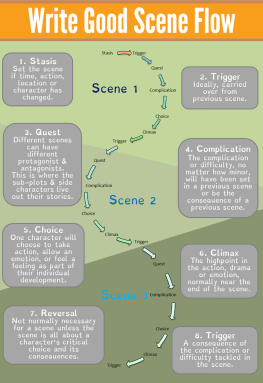
Since then I have extended my chapter length to 2,500 -3,000 words, to meet the demands690d6c652d1848a75fb20f069ec626e8 of ebook readers (pushing each chapter through a seven-point story arc), but the shorter paragraph lengths remain.  I have written more extensively about the perils of using first person present tense elsewhere, but basically many traditional readers do not find it a comfortable style in which to read.  A few even dismiss it as a tense in which you should never write a novel (I disagree of course), though most do get drawn into the story and style within a few pages, with some even describing it as ‘a uniquely intense narrative style’.

The younger generation have fewer problems with first person present tense than their elders.  Perhaps this has something to do with their familiarity with texting and snapchat, which is partly what caught my eye about this article and these stats.

Perhaps I was right all along, perhaps I should return to a 1000 word chapter length.  It all comes down to my target audience.

Good Scene Flow InfographicTarget Audience

However, my problem is I have two target audiences:  young adults who read mostly on mobiles and who like the dystopian aspects of my novels; and more mature readers who like the steampunk aspects and read on ereaders or larger screens.

To satisfy both audiences I am contemplating reducing my scene lengths to about 1000 words, but including two or three scenes in a chapter, each with their own seven-point story arc.

Of course, there is always the argument that a novel doesn’t need chapters at all, but I will save that for another blog.

So, what is your practically perfect paragraph and chapter length?  How do you write for the different media used by your readers?  I would love to hear your opinions and comments.

Nick

Steampunk Author Interviews

Want to know more about the authors whose books are featured in Best Steampunk Reads?

Now you can.  Because I have added a new section to my website with in depth interviews of those steampunk authors featured on the Best Steampunk Reads page.

These interview not only give an insight to their stories and characters, but also offer a tantalising glimpse of their writing techniques and habits.

So far there are interviews with Austin Hackney, Steve Turnbull, and myself, but over time it will grow into a comprehensive library of writing experience.

Okay, so it also offers something else I can tweet about and put into my newsletter.

View Steampunk Author Interviews here.

Best Steampunk Reads

steampunk-mw-cat-h-401

Best Steampunk Reads is a new section I have introduced on my website.

I don’t know about you, but I struggle to find good steampunk reads.

Being a niche market, most steampunk is written by Indie authors, like myself, who self-publish.  Filtering out the good from the not so good, and the promising from the mundane is not so easy.  So I have added a page to my restructured website where I highlight my favourite steampunk novels.

Being a novelist myself, it’s no surprise that I favour character driven stories.  For me, characters that embody the attitudes of steampunk always trump stories that just display steampunk settings and costumes.  So, if you enjoy character driven steampunk stories you may like to try out some of the stories features on my Best Steampunk Reads page.

The commercial bit.

If you are a follower of my blogs and articles, I’m sure you have already guessed there is a commercial element to all this.  I would like to say, “No, I’m just doing it because I am kind and I like to do things for free.”  Whilst this is true, I do have to stick my hands up and admit there is a commercial element.

First, if you click the links on the Best Steampunk Reads page and buy the featured books from Amazon, I will get a small (very small) affiliates commission.  There is no way I will get rich via this, but every penny counts, and maybe, just maybe, my Best Steampunk Reads will become the ‘go to’ page for steampunk fans – more probably pigs will fly first, but it worth a shot.

More importantly, I cannot write fast enough, or publish often enough, to keep my fans and subscribers fully engaged.  This means I need something else to fill the newsletters I send to my email list of fans and subscribers and news about other steampunk publications and authors is ideal stuff.

So have a look at my Best Steampunk Reads, and tell your friends/family/followers/subscribers/the whole world.

Nick


Brexit Drama Ends in Bloodbath

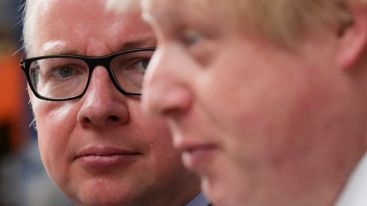
90201467_033314905-1Machiavellian betrayal, Shakespearian tragedy, dark mystery.  The last few weeks in British politics has been an incredible roller coaster ride for everyone.  There is much to learn here about the nature of story, the nature of perceptions, even the nature of life.

This article by Mark Mardell succinctly sums up what probably happened.

There is also the odd, but in my opinion revealing, story of Boris turning up for a meeting with his main assumed rival, only for her not to show up: why would he even agree to meet with her unless he too was planning a betrayal?

Beyond that, are rumors of George Osborne, the  chancellor, manipulating Gove behind the scenes, no doubt in an attempt to save his own political career.

Let’s get a few of the simpler story issues out of the way:

  • None of the actors in this saga believes they are villains – they all see themselves as the heroes. It is us, the observers, who immediately  allocate to them the roles of victim, hero, and villain, but we may have allocated wrongly (more about this later).
  • Everyone, with maybe the exception of Boris (more about this later), did what they did because they believed it was right for, themselves, others, and their country. No one acted the way they did because they are inherently evil – they all had, or believed they had, very good reasons for taking the actions they did.
  • When the stakes are high, and real power is the goal, ambitious people will reveal their true nature. This is the essence of a good plot:  make sure the goal is large enough, make sure your characters desire for the goal is absolute, put them under real pressure, and make the story about your character’s actions driven by motives and/or beliefs.  What we really want to know is, why do they do what they do?

Now to the more complicated story stuff:

Nobody could predict how this drama would play out.  The characters involved made minute by minute decisions, without knowing the full consequences, or how others would react, and without necessarily knowing what the others were doing at the same time.  And yet we, the observers, describe what has happened as Machiavellian or Shakespearean.  To make sense of this drama, we immediately look for story comparisons.

Why?  Because  we can’t help it.  Humans are inherently programmed’t to understand the world through the medium of story.  It’s our way of making sense of the world around us.  We automatically look for a story that fits the presumed scenario and if the facts turn out to be incorrect, then we just change the story until we find one that fits.  We want there to be a villain, we want a hero, and we want a victim.

What does this mean for authors?  Every time we create an original story, we are potentially creating a new frame of reference to help individuals understand the world.

So who is the real villain of the piece?  Strange as it may seem, I believe Boris is the real villain.  He is the one who joined the Brexit Out campaign for his own political ends.  He never really thought it had a chance of winning , which, he reasoned, meant it didn’t matter if he threw his weight behind the campaign:  he could increase his political influence within his party, as the valiant loser (a peculiarly English characteristic) without doing any real harm to the country.  As Mark Mardell says in his article, “Winning is where it all went wrong for Boris.”

So who stabbed who in the back?   I believe Gove, realising Boris had faked his enthusiasm for Brexit and had little appetite for following through, did the only thing he could for a cause he felt passionately  about:  sidestep Boris and put himself forward.

And Boris’ revenge?  I believe it was enacted immediately.  By not standing for the leadership himself, Boris successfully cast Gove as the back stabbing villain, with himself as the victim, and ensured Gove’s leadership bid would end in defeat.

Curiously, even though I believe Boris is the real villain, it is still very difficult to view Gove as anything other than ‘the politest back-stabbing villain in history’, because Boris has spun the story so brilliantly.  As political thrillers go, this is a plot of genius – a description sometimes used of Boris himself.

And just where did that phrase, which will haunt Gove for the rest of his life, “The politest back-stabbing villain in history,” which the media has jumped on so readily, originate?  If it were my plot, it would have only one subtle source.

In his article, Mark Mardell predicts a final act in the drama, where Boris enacts his revenge on Gove.  But this was not to be.

Step into the drama a side actor, who has to this point been expertly navigating the choppy  and treacherous political storms with cunning and caution.

The last act of this whole drama belongs not to Johnson or Gove, but to the new British Prime Minister, Teresa May, who now steps into center stage.  During her first two days in office, she strikes efficiently and ruthlessly, to carry out an audacious political coupe of historic proportions.

From a political perspective, it’s a bloodbath.

The new prime Minister systematically dismantles the government of the previous six years.  If the old Chancellor, George Osborne, was behind the Gove/Johnson betrayals, in an attempt to retain political influence, he is now the main political casualty.  Not only has he lost his own job, but his entire political power base, and that of the previous Prime Minister, David Cameron, has been shredded.  This includes Gove, who is now thrown on the political scrap heap.

Rumors or not, the new Prime Minister has no intention of letting anyone manipulate her – who would have thought she had it in her.  She has created a very Thatcherite or Churchillian government, with, to put it more politely than Churchill, all the potential mavericks inside looking out, rather than outside looking in – a cabinet of ‘nay sayers’ as Clinton would call it.

Johnson has landed a top job as Foreign Office Minster.  He did indeed goe his revenge on Gove , but ironically not through his own scheming, but as a weapon wielded by an even greater power-player than himself.

What a story!


Death Defying Leap

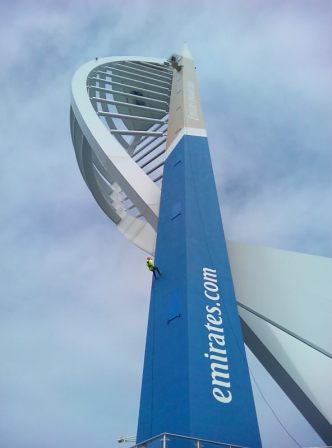
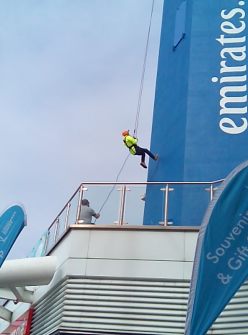
IMG_20160619_091043The yellow dot in this photo is me abseiling 360 feet down the Spinnaker Tower in Portsmouth UK.  I don’t like heights, but this was terrifying.  I was shaking for ages after the climb.
Why would I put myself through this torture?  Well, all in a good cause.  I was raising money for a small but effective charity called Revelation Life.

I was so impressed that this charity appear to not just be doing all the right things in the right way, but in a way that spreads viraly through the slums of Nairobi.

To my simple mind, helping someone in such a way that others want to copy it, has got to be worth supporting.

If you would like to help increase the amount raised by this abseil, you can do so at my MyDonate page.

IMG_20160619_091059

This is your one and only chance to give because I am definitely NOT doing another abseil.

Yep, that is me near the bottom of the tower, kicking my legs wildly, because I could no longer reach the wall

Why do I need a Book Marketing Plan?

Here’s the short answer: focus.monocular

Focus on the Book Marketing Plan

Technology has opened up many new opportunities for indie authors to market books and continues to do so, but it’s a chaotic world and a book marketing plan really helps you retain focus.  If you try to follow all the latest technologies or let yourself be swept up in one current trend after another, without a plan, you will end up spreading yourself too thinly, like a scatter-gun.

This may be fine for those with an existing platform (celebrity/notoriety/social media presence) or large amounts of cash to splash on promotion; they make a quick killing and move on.  But for the rest of us average Joes, that produce averagely good novels and seek only to make an average living from our work, something more sustained is required.  And that requires a book marketing plan; actually, you may need more than one, but more about that later.

If you self-publish your novels, then you are not just an Indie author, you are also an entrepreneur.  Your writing is a business that you run for your own benefit.  I am not a marketer, but as someone with experience in business strategy, I can tell you that businesses without plans are businesses that fail.

Sustainable book marketing plansfalling20graph-thumb-250x249-2631

Sustainability, weight, gravity, presence, platform, consistency, popularity, expertise—whatever you call It, you need it to make you book visible, and if you don’t have It already then it has to be built, by you.

Let’s be realistic: even with the best and most widely promoted book launch, your novel will (unless you have written a masterpiece, or caught the public imagination) quickly sink in the vast mire of social media activity.

If you are lucky with your launch, you will have covered the production costs of the novel and not be out of pocket on the promotion.  If you are really lucky, you may have made enough profit to cover the production cost of the next novel.  A few people will have made enough to fund their lifestyle until the next launch, provided they are not too overindulgent.

For most authors, the investment of a launch will have resulted in a financial loss.  Such is the life of a jobbing indie novelist—come on, you didn’t think telling stories for a living be easy, did you?

The Long Tail book marketing planlongtailannotated

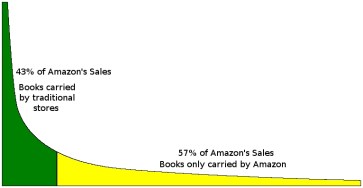
The real benefits of self-publishing as an indie author is in the long-tail.  I have written about the long-tail in other articles so I will not repeat myself here.  The long-tail requires time: years.  It requires effort and consistency.  It requires a back catalogue: lots more novels.

If you aren’t able or willing to put in a sustained effort over years to build your brand, stick to the day job and enjoy you writing as a hobby. (Wait, did you just say ‘brand’? I did, more about that later).  There is absolutely nothing wrong with writing for a hobby—it’s a very rewarding hobby, for which your fans will love you, but don’t expect to make a sustainable living.

Build a Book Marketing Plan

To build presence on social media, you need a plan.  Again I have written about this elsewhere.

There is loads and loads of great advice on the internet about how to form your own book marketing plan.  As whatever if might recommend will almost certainly be out of date shortly after I post this blog, I shall leave you to explore content of a book marketing plan for yourself.  The important point I’m making her is that you really do need a plan.

Some book marketing plans are better than others.  Some will be more suited to your character, lifestyle, subject matter etc.  Some will require a lot more work than others.  The important thing is to come up with a book marketing plan that you are comfortable with and that you can sustain over years.

Something is better than nothingmeaning-of-life_peanuts-cartoon

To some degree it doesn’t even matter what the plan is, as long as you have one.  My time in business taught me a couple of things about business plans and therefore book marketing plans:

  • It you don’t have a target or an aim, how can you measure how well you are doing?
  • A book marketing plan helps you set short term goals and actions.
  • A bad book marketing plan can be improved once you start measuring your targets and aims.
  • Failure or inefficiency can be tracked if you have a book marketing plan to analyse.
  • Changing direction by adapting an existing book marketing plan is a whole lot easier that starting again.
  • A good book marketing plan can be improved by doing more of what is working well.
  • If you try something new, and you should be constantly experimenting, a book marketing plan will ensure you don’t take our eye off the ball and drop what is already working.
  • Change is inevitable, so even the best book marketing plan need monitoring, revision and updating. What works today may not work tomorrow, or some new opportunity may come over the horizon.
  • A book marketing plan give you the illusion of control, at least over your small niche, in a vast and chaotic marketplace.
  • If you are struggling with marketing or creative choices, referring back to the book marketing plan can help you make good decisions.

Hopefully I have now convinced you of the need for your own book marketing plan.  Now I’m going to mess things up, because you might need more than just the one plan.

Multiple Book Marketing Plans

You could heave a great sigh and give up at this point, but stick with me, it’s not as bad as it sounds.

  • If you have more than one novel, you need a plan for each novel.
  • If you have more than one audience, you need a plan for each audience.
  • If you have a series, you need a plan for each series.

Brand in book marketing plansyou-brand

Your brand (there’s that word again) is whatever you use to identify your books to the market: book name, book series, author name, company name, the name of your author cooperative/group, publishing imprint etc.

  • If you market with anyone else, you need a plan for the brand.
  • If you market by yourself, you are the brand, so you need an overall plan for the brand of you.
  • If you publish under different names, or by different media channels, you have multiple brands, so you need a plan for each.

In fact, the more detailed your business model the more detailed your plans need to be for you to remain in control, or at least maintain the illusion of control.

Direction and aim is a valuable thing in a chaotic world—they steady the ship in the storm.

How to start you book marketing plandescriptive-research

Go on, don’t be shy.  A few simple sentence are all you need to start the plan:

“My novel is about…”

“My novel fits into the  genre (or genres) of…”

“My target audience are…”

“They can be found…”

“I want my novel to…”

“The three most important things I will do to achieve this are…”

There you go, you have already made some important decisions about your marketing and you already have a more detailed book marketing plan than the majority of indie authors.

If you have any useful ideas for book marketing plans, please leave them in the comments.  And finally, all the best with the book marketing plan.

A Dystopian steampunk Author