All posts by Nick Travers

Write A Novel In 17 Steps

a_novel_by_-_550wEver wanted to write a novel but didn’t know where to start? Here is my 17 step summary to help get you started and write a novel:


  1. Get everything out of your head so you have some creative space. Remember the pensive in Harry Potter, you need a literary version of this. Write down every story idea, character, story outline, scene – you can do this in a note book or in a computer.
  2. Start putting everything into10 order to make a story. If you scribble basic outlines of each scene/story idea onto scraps of paper or sticky notes, you can literally lay them out before you until they start to make some sort of sense. You will likely have bits missing or maybe not even have an overall story – that is fine, any order is better than none.
  3. Stop! Steps (4) & (5) are interchangeable, so do whichever takes your fancy first.

4. Take time to sketch out you main charactersoriginal_character_sketch_1_by_mingming07
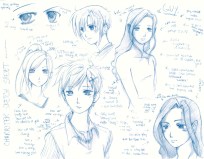
  • Who are they? What are they like? What life events have shaped them the way they 

    are? What do they want? Why?

  • What is their past, what are the relationships between them, what strengths and flaws do they have, how will they have changed by the end of the story?
  • Ideally, your Protagonist’s (Hero) and your Antagonist (villain) should want the same thing or same goal – that way they are in direct competition. What do they want – this is the aim of your story.
  • Try to make the character flaws of your Protagonist the character strengths of your charactertraitsAntagonist, and the character strengths of your Protagonist the character weaknesses of your Antagonist – again putting them in direct conflict.
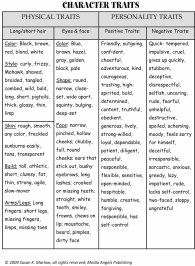
  • The flaws in your Protagonist’s character are the thinks that let them down and get them into trouble. Overcoming one or more character flaws is what leads to ultimate victory or them gaining the thing they want. So what flaws will lead them into trouble and what flaw(s) will be overcome? Jot down story ideas and scenes.
  • The strengths in your Antagonist’s character are what gives them victories over your Protagonist. However, failing to overcome one or more of their character flaws is what leads to they ultimate failure or to losing the thing they are after. So what are their strengths and what flaw(s) will they fail to overcome? Jot down story ideas and scenes.

5. Take time to think about your overall story:

  • What, in very simple terms is your story, (sum it up in one short sentence) – a much harder exercise than it seems.
  • How will the main character(s) have evolved from the beginning to the end of the story (One sentence for each character).
  • Think up some subplots which might compliment/juxtapose/parody the main story, or which show character growth (one sentence for each).Bgi7g7yCQAAjA87
  • If you don’t already know about Story Arcs, do some research, start to fit your stuff from steps (1) & (2) into your main Story Arc.
  • Take out every scene and story idea that does not progress the main story.
  • Use deleted scenes and story ideas for sub plots and character stories. Again, fit them into Story Arcs. If they still don’t fit, save them for the sequels.
  • Fill in all the gaps with new story ideas and scenes.

6. Do whichever of step (4) or (5) you didn’t just do.

7. Start putting everything together:

8. Put everything together for your main story into one straight line in chronological order – lay them out on the floor if you have to.

9. In separate lines lay out the scenes/story ideas for each sub-plot and each character development/story, and decide where they start and finish in relation to the main story.

10. Merge all the story lines together.stickynotes_08
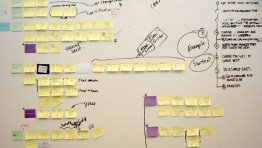
11. It may have taken you hours, days, weeks, or even months, to complete this exercise, but you now have an outline plan for your entire novel.

12. Start writing.

13. Edit for story content, plot, description, setting, scene flow, and characterisation.

14. Edit for grammar and spelling. Also sentence, dialogue, and paragraph 4360118369_e8a55d0ed2_oconstruction.
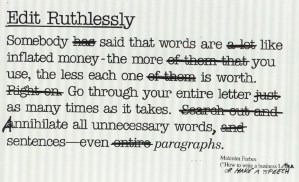
15. Edit for word flow and readability.

16. Publish.

17. Remember, you also have to have a life while you are writing.

Of course, there is a lot more that just this summary you need to know to write a novel, but once you get started you will soon discover what else you need to research.

Get started by following these 17 steps, to write a novel, you will learn as your writing craft develops.  The main thing, is to have a go.

Nick
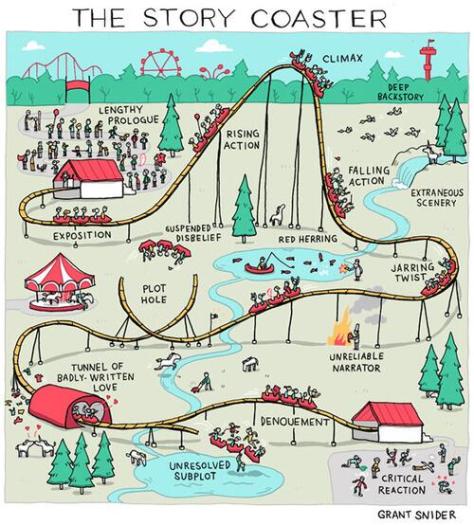
 

The Story Coaster

I don’t know where I found this writing infographic by Grant Snider, but it is spot on. I especially like the plot hole:

Bgi7g7yCQAAjA87

Seriously Deep Writing

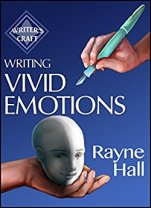
Writing Vivid Emotions

51y-spuncql-_sy346_
 

Linked to Amazon


I’ve just pre-ordered a new book by Rayne Hall, called ‘Writing Vivid Emotions: Professional Techniques for Fiction Authors‘.  As my regular readers know, I’m always on the lookout for serious books to challenge my writing technique.

I’ve heard good reports of Rayne’s books, but never read any myself.  Being a cold hearted stone myself, I know I struggle  with writing character’s emotions.  However, the thing on the book blurb that really pulled me in was about ‘layering character emotions.’ That sounds like serious writing to me, and when it comes to writing, I’m a great fan of layering.

So I wait with baited breath for the publication date of the 20 February 2017 for my brand spanking new copy of ‘Writing Vivid Emotions: Professional Techniques for Fiction Authors’. The pre-order version was also ridiculously cheep, which helps – something else about which I am serious.

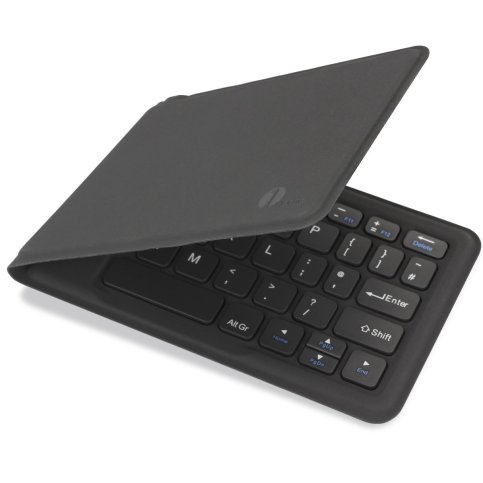
Cool Ultra Mobile keyboard

I don’t usually do reviews unless I come across something truly awesome, but I spotted this Proster Ergonomic Fordable Keyboard on Amazon and just had to give it a try. It didn’t disappoint.
Just today a guy walked up to me while I was using the keyboard,  bluetoothed to my mobile phone, and said, “Now that is a cool piece of tech.”
61cmkfmgf9l-_sl1200_1
I’ve been looking for a descent,  lightweight,  fully functioned, foldable key board to use with my mobile phone for a long time.  Everything I’ve seen to date has drawbacks, bits sticking into your hands as you TouchType, chunky battery compartment,  unresponsive rubbery keys, big bulge in the pocket.
The Procter is exactly what I’ve been searching for: It slips neatly into a jacket pocket without bulging, turns on when you open it, has a rechargeable longlife battery hidden somewhere in the ergonomic design, it’s easy to pair and use, clicks distinctly but discretely when in use, is totally unobtrusive,  and firm enough to use on your lap without needing support.
This is it! This is the ultra portable keyboard I’ve been looking for since the Palm Pilot folding keyboard went out of production in the 1990’s – that too was an awesome piece of kit.
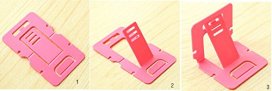
Not just a cool bit of kit, the Proster Ergonomic Fordable Keyboard has changed the way I write. No longer do I need to carry round a bulky notebook/laptop, now I can just stroll into coffee shop and produce my mobile phone from one inside pocket and the Proster Keyboard from the other. I prop up the phone on a credit sized plastic stand, that fits inside the keyboard when closed.
41pctve2eol
Then type directly into an app like Evernote that will sync with my home computer. For the first time I feel totally mobile with my writing – now, I feel, I can truly write anywhere.
The Proster keyboard is truly awesome.  As soon as you unpack it from it’s wrapping you just know you are holding a well designed, quality piece of kit.  It looks good, feels good, and is a joy to use. It’s hassle free and it just works. What more could you ask?
I highly recommend the Proster Ergonomic Foldable Keyboard to anyone looking for a fully featured highly portable keyboard.  If you want one, you can get one here, the Proster Ergonomic Foldable Keyboard.
Nick

Resist both 1st & 3rd points of view

half-portraits-2
Stare at the photo for 15 seconds. Is it a side or front view?

Is it possible to write a novel using both first and third person points of view at the same time? An interesting proposition, though one would urge writers to resist.

Given the perils of writing first-person present tense, mainly the difficulties of remaining consistent in viewpoint, consistent in tense, and your characters not knowing what they cannot know, I should imaging writing a novel which includes both a first and third person point of view would be very difficult. But not impossible.

In fact, it sounds like an interesting project. The key would be how well you know your characters and how rigorously you understand your different character’s point of views.

For instance, describing another character happens very differently in the two points of view: In the first person, your character can only know what they directly experience about the other person, or what they suspect based on their own prejudices and emotions. But in the third person, the narrator can accurately describe a person’s character so the reader understands fully what drives them.

e.g. ‘Mary didn’t like me, she always treated me with disdain. Personally, I think she had a problem with authority figures,’ is very different from, ‘Mary was very shy. She struggled to express herself in even the simplest of ways, especially around men, and even more so with people she admired, like her boss John.’

Both these descriptions are of Mary, but the reader is left with totally different perception of the same character. I imagine resolving this story would present problems. First you need to decide whose story you wish to resolve, Mary overcoming her shyness or John realising Mary’s attitude is not about him? Or is the story all about John coming to appreciate what the reader knows from the very first? If the latter, how do you keep the reader’s interest long enough for them to stick with the story?

Also, would readers be willing to invest mental energy into a story which constantly changes viewpoint – some find the concept of time travel challenging enough, but to have such a challenge written into an alternating point of view might be more than some readers can bear. Given my experience writing novels in the first person present tense, I suspect may readers would not tolerate such an alternating point of view.

The more I think about this, the more challenging the story elements become. The only situations in which I can see this working are romance or comedy, or comedy romance. It could, though, be a useful exercise to help a writer hone their focus on a particular point of view.

If you are tempted to have a go at writing in both the first and third person points of view at the same time, I would recommend writing a few short stories this way first and testing reader reception before launching into a full novel.  It may be best to resist the temptation – except for your own amusement.

Nick

Why you need a yearly writing plan. 

10
I am a great believer in reviewing and setting achievable goals for the year; these are less wishful thinking and more time scheduled actions.  I particularly set goals for my writing businesses, all of which goes in the yearly writing plan.
For the past decade my New Year’s resolution has always been the same: ‘To make no more New Year’ s Resolutions.’ The reason for this is simple,  New Year’s Resolutions ten to be short term failures leading to disappointment and self loathing for my woeful lack of will power.
I take my time to formulate these goals after the Christmas madness,  so they are rarely fully formed until mid January –  I still call them New Year Goals, though, since that is when I start the process.
writing-phdcomics
By producing a plan of goals, I can take control of my writing. It has taken a while to hone down the plethora of possible objectives available to me in 2017.
Having failed to complete the second novel in the Nina Swift, Dystopian Steampunk series during 2016, this clearly needs to be my priority for 2017.
With floods,  health issues,  and extra clients all now behind me,  I can once again turn my nose to the grindstone that is writing.  Two of the biggest time eaters of 2016 wer marketing and platform building.  My marketing efforts have been dismal,  selling five to ten books per month across all platforms. Building a following has,  by contrast been much more suspenseful. I currently have 16,000 high quality Twitter followers and an email list of about 200. Platform building has also been successful,  with a Buffer list of 100 tweets containing articles,  blogs,  and writing comments,  all pointing back to my website.
So on to the 2017 objectives.
1. Complete books two and three in the Nina Swift series.
2. Undertake no further marketing until both books are complete.
3. Give ‘Gaia’ s Brood away for free in return for email signals,  using book funnel.
4. Reposition ‘Gaia’ s Brood’ into the YA market.
5. Continue to build platforms and email lists.
6. Learn how to use Facebook for book marketing.
That should be plenty for her year.
Now I just need to ensure all my writing activities for the year focus on these objectives and these objectives only.
Nick

Single or Multiple Point of View

Script writingWhen considering whether to use a single or multiple point of view for your story, there are only three factors you need to consider:

What best makes the story work. How do you want to tell the story – is it better from one pov or does it work better if told by multiple people? This will depend on how you want to construct your story. Start with a single pov and see whether other points of view will help the telling of the story later on.

What do the character want? Oh yes, the characters get a say. Sometimes they demand for their opinion to be heard. Weird? Maybe, but once you start writing you will be surprised how your character’s start to have opinions on what you are doing. Or maybe I’m just odd.

Which reads best? Your writing style may suit one pov better than another. Sometimes, the story or character’s personality can alter your writing style so a particular story sounds better in a certain pov. You need to experiment with different points of view until you find one that flows well and you are happy with.

Nick

Writing with Dyslexia

hand-stopI’ve recently finished helping one of my clients write a dissertation on teachers with dyslexia. I am slightly dyslexic, my client is severely dyslexic. Part of the research was a series of interviews with teachers who have dyslexia. I will try to summarize what was found.
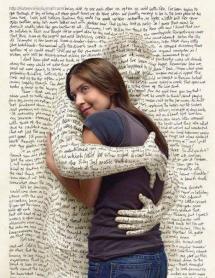
Dyslexia is not an illness, or a condition, but a different way of seeing/processing the world. Yes, it presents challenges in a world ruled by print and reading, but also has a lot of advantages where creativity, practicality, memory, oral storytelling, and alternative solutions are required (80,000 years until the printing press was created – well that’s my theory anyway).

The main issue that will drive your solutions, is the degree and nature of your dyslexia.

Teachers with dyslexia are a recent phenomenon, which attests to the way technology has helped people with dyslexia overcome many of the difficulties that used to keep them out of the profession. It is the same in writing.

First the software:

  • Spell Checker (but not Grammar Checker)
  • Auto Correct (for correct spelling – Auto Correct builds up over time)
  • online thesaurus (finding those elusive words hovering at the edges of your mind)
  • Dragon/Claro Read/Windows text-to-speech (for reading out your work)
  • Inspiration/Mind Genius (for mind mapping)
  • Dragon (for dictating)
  • Dyslexie Font (brilliant Dutch creation – free to individual users)
  • Powerpoint/Flowcharter/Scrivener/index cards (for visual story boarding)
  • Scrivener/MS Project/Flowcharter/Excell (visually keeping track of your writing projects)
  • Evernote/Dropbox (capturing those fleeting thoughts, pictures, dictations)
  • Colored screen backgrounds (ivory is my favorite).


Hardware:

  • Dictaphone/Mobile Phone (who says the first draft has to be physical, just upload your dictation to Dragon and let the computer transcribe the text)
  • Good quality Headset Microphone (I dictate while I do the household chores using a Plantronics headset)
  • Headphones/Earbuds for listening to text-to-speech in public
  • Colour Coding/coloured Post-it-Notes (to visually keep track of characters/storylines/plot points etc).

Other:

  • Beta readers
  • Alpha readers
  • Writing buddy
  • Proofreader and/or editor (find affordable ones on Fiverr or similar)
  • Outsource stuff you struggle with (Fiverr again or similar)
  • Find other writers who are dyslexic to share thoughts/best practice
  • Know your limits if fatigue is a problem – take regular breaks
  • Share your issues with others/teachers/agents/publishers (you will be surprised who else is secretly dyslexic/dyspraxic/autistic etc and can offer help)
  • Research the internet to see what solutions other people with dyslexia have found
  • Don’t be afraid to think and write visually – in fact you probably have an advantage here over writers slavishly tethered to grammar/text – let your imagination fly.
  • Don’t be too hasty to ‘correct’ those descriptions where you might have used the ‘wrong’ word – good writers slave for hours trying to ‘think outside the box’ and find unique descriptions.  Take time to understand the words you have used and think about how they could fit into what your descriptions or use them to trigger other thoughts.  Your mind might be naturally ‘outside the box’ – in terms of writing descriptions, a veritable gold mine.

I let my poor spelling stop me from pursuing my dream of becoming an author for twenty-seven years.  Don’t let dyslexia stop you from pursuing your dream – there are ways around everything.

Finally, writing is about having something to say, not spelling and vocabulary: these things are part of the editing process that can be ‘corrected’, after the first draft has been produced, with the tools available. No one but you can produce that first draft and say the things you have to say.

Now get writing!

Nick


Quotes within Quotes

313970_476362175725200_1967134630_nWhen it comes to writing speech within dialogue, a fair amount of confusion seems to prevail.  Of course, which convention of English Grammar is deemed correct depends in which part of the world you are writing.  It also matters greatly whether you are writing fiction or non-fiction.
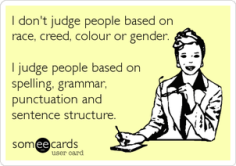
Writing non-fiction:

British grammar: Don’t use quotes within quotes. Use reported speech within double quotation marks at all times.

“That’s when the mechanic boasted he knew everything about engines, but to be honest, I wasn’t convinced.”

US grammar: It is acceptable to use single quote marks within double quotation marks.

“That’s when the mechanic boasted, ‘I know everything about engines,’ but to be honest, I wasn’t convinced.”

Fiction:

If you want to be geeky about it:8173924

British grammar: Either use double quotation marks within double quotation marks, which looks clunky or use reported speech within double quotation marks.

“That’s when the mechanic boasted, “I know everything about engines,” but to be honest, I wasn’t convinced.”

“That’s when the mechanic boasted he knew everything about engines, but to be honest, I wasn’t convinced.”

US grammar: Use single quote marks withing double quotation marks.

“That’s when the mechanic boasted, ‘I know everything about engines,’ but to be honest, I wasn’t convinced.”

But in modern works the opposite is also acceptable, provided your use of speech marks is consistent throughout your work.

‘That’s when the mechanic boasted, “I know everything about engines,” but to be honest, I wasn’t convinced.’

Otherwise: dialogue within fiction is an art form; how we construct that dialogue using grammar is also an art form. Dialogue in fiction should be seen as an extension of a particular character’s personality—how we speak can define how others see us. I often use different grammar conventions for separate characters, this way the reader can identify who is speaking without me having to always use an identifier.

Personally, I normally use either reported speech or single quotes within double quotes, (I think this convention looks clean and everyone understands what it means).  Which I convention I use will depend on the character, their personality, and what I want to convey through that particular piece of dialogue.

j5rftldn_400x400
However, (and grammar geeks round the world will choke at this) when it comes to fiction, provided the grammar fits your writing style and character personality, and provided you are consistent throughout your work, anything goes.

The main test is whether the grammar you use clearly conveys the meaning you intend to convey.

Regards,

Nick

Eight Secrets to Book Marketing

Advertising sign on wooden postEveryone thinks it’s easy: write a book, self-publish, rake in the money. But actually it is really, really difficult.

No matter how good your story or how well edited or how brilliant your cover, if your book isn’t visible, it might as well not exist. Self publishing is really all about Self Marketing:

  1. To make sales you need marketing funnels.
  2. To make funnels you need products – books, stories etc.
  3. To get your products noticed you need reviews, lots of them.
  4. To get the reviews you need a fan base.
  5. To get a fan base you need a social media platform.
  6. To get a platform you need followers on social media.
  7. To get followers you farm social media with content
  8. To get content you need to write and publish regularly and often.

The less money you have for adverts the longer it will take. So start writing that next book so you have more products for your marketing funnel, learn about marketing, start building your platform, and give away your existing work to anyone who will provide a review.

Here’s a book that might help you: ‘Write. Publish. Repeat’ by Sean Plat & Johnny B Truant.

All the best,

Nick